
Chef Knives: The Heart of Every Kitchen
In any kitchen, whether you’re cooking a gourmet meal or just preparing a simple dinner, one tool is absolutely essential: the chef’s knife. It is the cornerstone of every professional chef’s toolkit and an indispensable tool for home cooks as well. But what makes chef knives so special? In this blog post, we’ll explore everything you need to know about chef knives—from their history and types to how to choose the perfect one and how to take care of it.
The History of Chef Knives
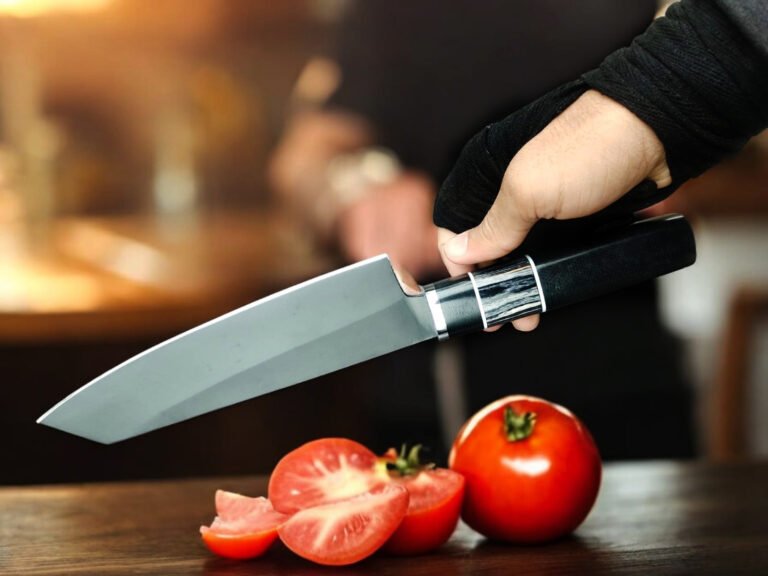
The chef knife has evolved over thousands of years, starting from basic tools made from flint and stone. In ancient civilizations like Egypt and Mesopotamia, knives were simple, functional implements. As cultures advanced, metals like bronze and later steel were introduced, which greatly improved the durability and efficiency of knives.
The modern chef knife, often referred to as a “French knife,” traces its roots back to 18th-century France, where the design was popularized in professional kitchens. The distinctive, broad blade with a curved edge allowed chefs to chop, slice, and dice with more precision. Over the years, chef knives became an essential tool in kitchens worldwide, with various designs emerging based on regional preferences.
What is a Chef Knife?
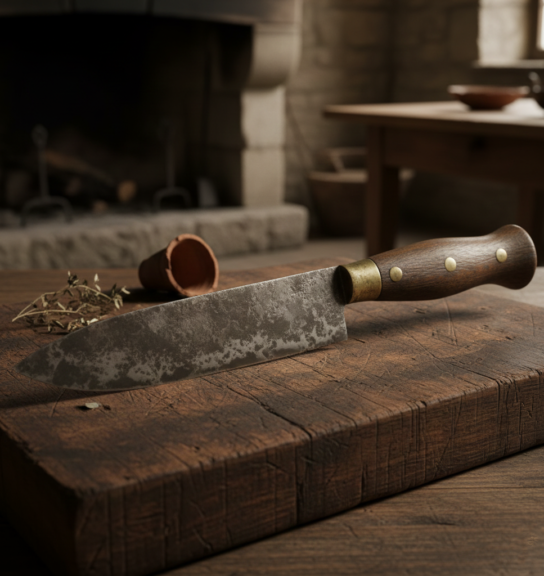
A chef knife typically has a broad, curved blade that tapers to a point. It is used for a wide range of kitchen tasks, including chopping, dicing, mincing, slicing, and more. A standard chef knife is usually between 8 to 10 inches long, although different sizes are available.
The versatility of a chef knife comes from its design. The curved edge allows the cook to use a rocking motion, making chopping more efficient. The blade’s broadness provides stability and control, which makes it easier to cut through a variety of ingredients, from vegetables to meats.
Types of Chef Knives
Chef knives come in different styles and sizes, and the type of knife you choose depends on your personal preference, the types of food you prepare, and your cutting style. Here are some of the most common types:
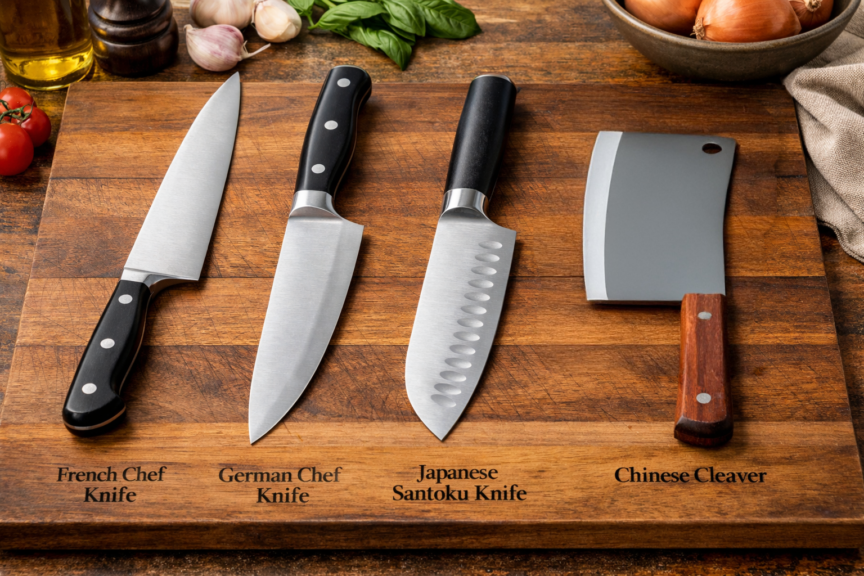
French Chef Knife (the classic chef knife): This is the most common type of chef knife. It has a curved blade and is perfect for most kitchen tasks. The length is typically around 8 inches, but it can range from 6 to 12 inches.
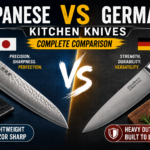
German Chef Knife: Similar to the French knife, but with a wider, more rounded blade. German knives are known for their durability and are often made with high-carbon stainless steel. The blade tends to be a bit heavier, providing more control.
Japanese Santoku Knife: This is a versatile, all-purpose knife with a flat edge and a slightly shorter blade (typically 5-7 inches). It’s particularly popular for slicing and chopping vegetables, meat, and fish. The Santoku is also lighter and sharper than many Western knives.
Chinese Cleaver: While not technically a “chef knife,” the Chinese cleaver is often used as one due to its versatility. The large, rectangular blade can be used for chopping, slicing, and even smashing garlic or ginger. It’s great for heavier tasks like cutting through bones or tougher cuts of meat.
How to Choose the Right Chef Knife
Choosing the right chef knife can feel overwhelming, especially with so many options on the market. Here are some key factors to consider:
Blade Material: The quality of the blade is one of the most important factors in a chef knife. Common materials include:
Stainless Steel: Popular for its resistance to rust and corrosion, and ease of maintenance. It doesn’t require as much upkeep as carbon steel but can lose its sharpness over time.
High-Carbon Steel: Known for its superior sharpness and edge retention. However, it can rust and requires careful maintenance (such as regular oiling and drying).
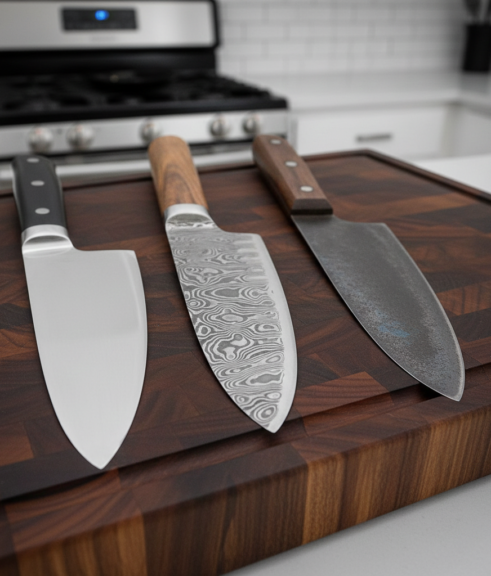
Damascus Steel: A beautiful and durable material made by layering steel, which is both functional and aesthetically pleasing.
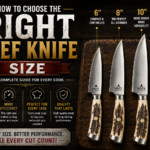
Blade Length: A typical chef knife ranges between 8 to 10 inches, but you should choose based on comfort. A shorter blade is ideal for smaller hands or more precise cutting, while a longer blade provides more leverage for heavier tasks.
Handle Comfort: A good handle is critical for control and safety. Look for ergonomic designs that fit comfortably in your hand. Handles are typically made from wood, plastic, or composite materials. Wood offers a traditional look, while plastic and composite handles are durable and easier to maintain.
Weight and Balance: The weight of the knife affects how it handles. Heavier knives provide more power, while lighter knives offer more control and agility. The balance between the handle and blade is crucial for comfortable use, so try to find a knife that feels balanced when you hold it.
Brand and Price: While it’s tempting to go for a high-end brand, there are plenty of quality knives available at affordable prices. Look for reputable brands with good reviews, and don’t be afraid to test a few knives in person to find what feels right for you.
How to Care for Your Chef Knife
A good chef knife can last for many years, but proper care and maintenance are essential to keep it in top condition. Here are some tips:
Hand Wash Only: Never put your chef knife in the dishwasher. The heat and detergent can damage the blade and handle. Instead, wash it by hand with warm, soapy water and dry it immediately.
Sharpen Regularly: A sharp blade is safer and more efficient. Use a sharpening stone, honing rod, or have your knife professionally sharpened at least once or twice a year, depending on use.
Store Properly: Avoid storing knives loosely in a drawer, as this can damage the blade. Use a knife block, magnetic strip, or protective sheath to keep your blade safe.
Avoid Hard Surfaces: Always use a cutting board when chopping. Hard surfaces like ceramic, glass, or stone can dull the blade. Opt for a wooden or plastic cutting board instead.