Japanese vs German Kitchen Knives: Complete Comparison
When shopping for a high-quality kitchen knife, one question comes up more than any other:
Should you buy a Japanese knife or a German knife?
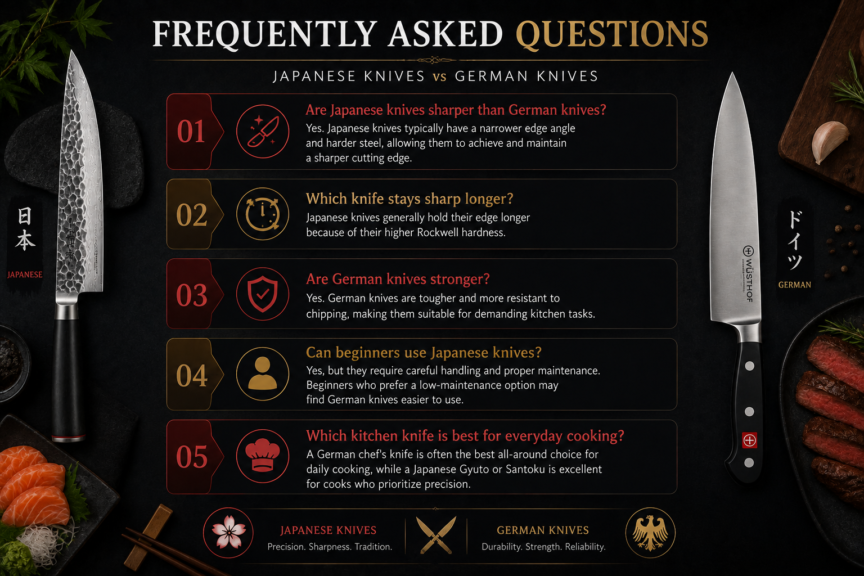
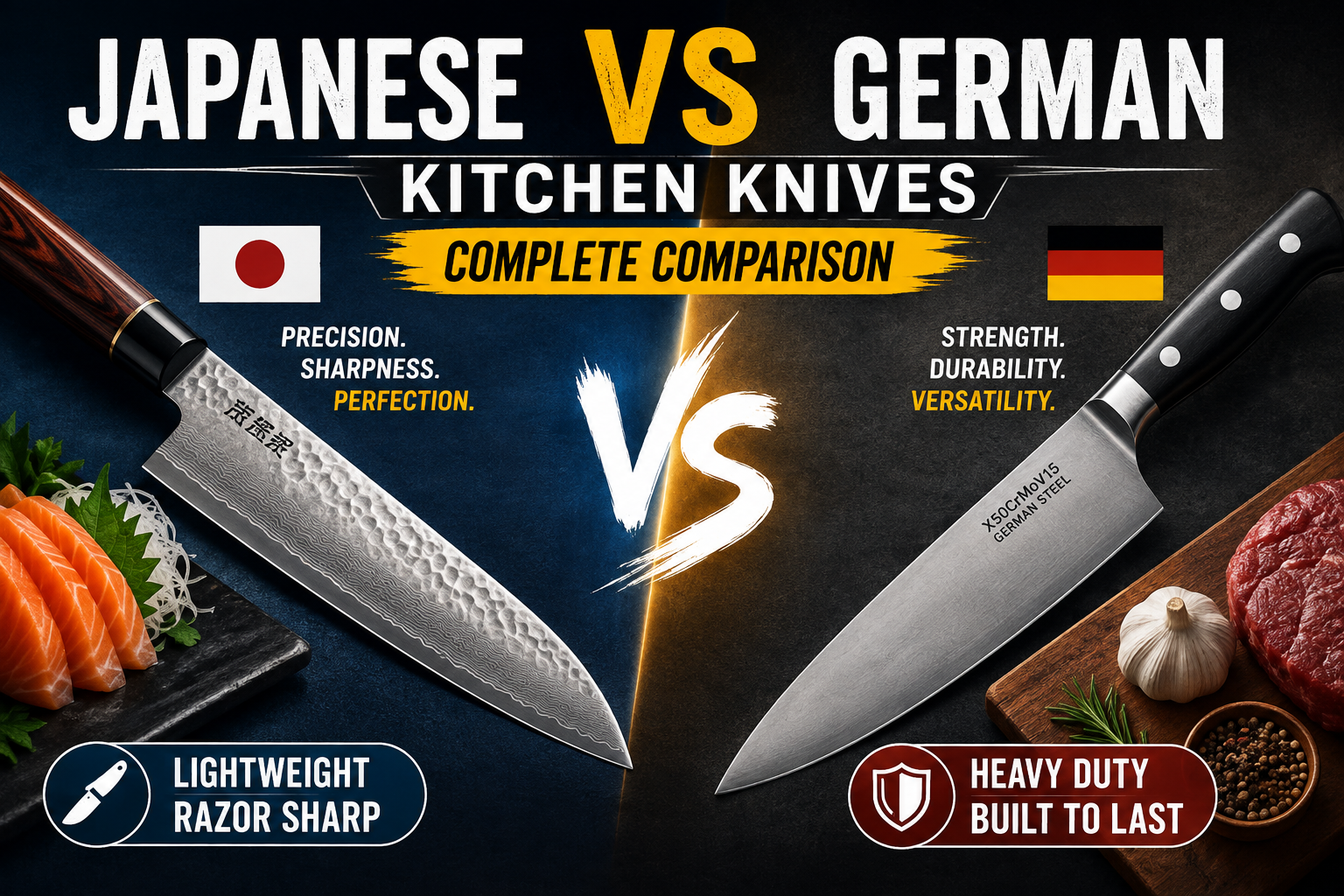
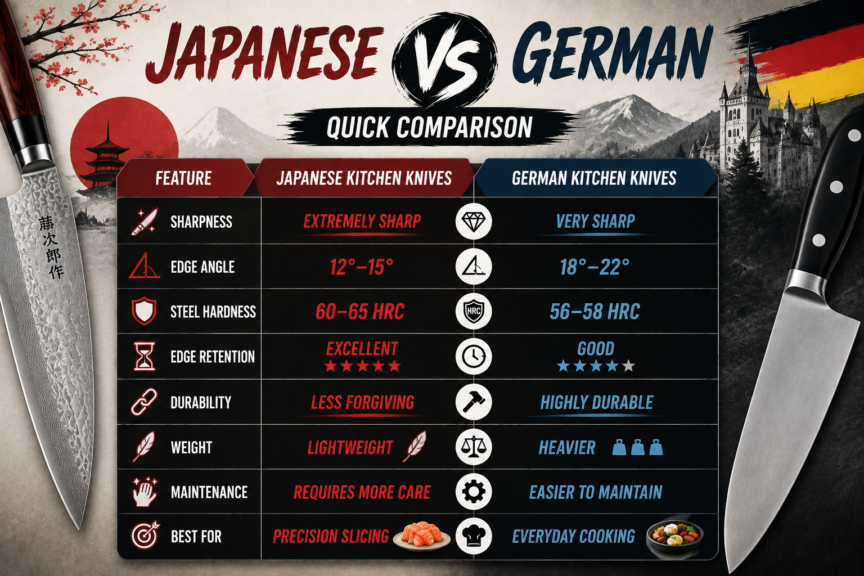
Both are among the world’s finest kitchen knives, but they are built with completely different philosophies. Japanese knives prioritize razor-sharp precision and lightweight handling, while German knives are designed for durability, versatility, and heavy-duty cutting.
If you’re planning to invest in a premium kitchen knife, this guide will explain every important difference so you can confidently choose the right one for your kitchen.
The Philosophy Behind Japanese Knives
Japanese knife makers focus on precision.
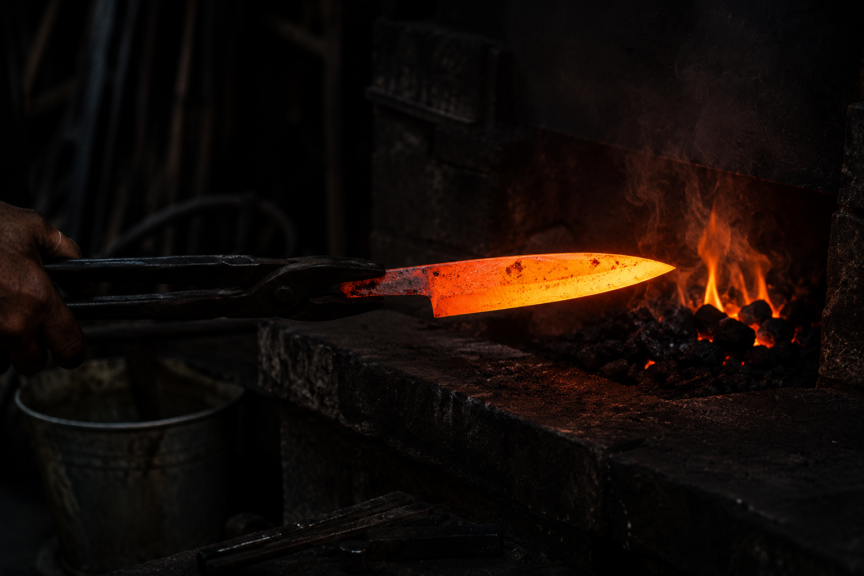
Inspired by centuries of sword-making craftsmanship, Japanese kitchen knives are designed to create incredibly clean, effortless cuts.
They excel at:
Paper-thin vegetable slices
Sushi preparation
Fish filleting
Fine meat trimming
Decorative food presentation
The blades are usually thinner and harder than German knives, allowing them to achieve exceptional sharpness.
The Philosophy Behind German Knives
German knives are designed for versatility.
Instead of maximizing sharpness alone, German manufacturers focus on creating knives that can handle almost any kitchen task without worrying about damage.
German knives are ideal for:
Chopping vegetables
Cutting poultry
Slicing meat
Crushing garlic
Everyday meal preparation
Their thicker blade construction makes them stronger and more forgiving.
Steel Hardness
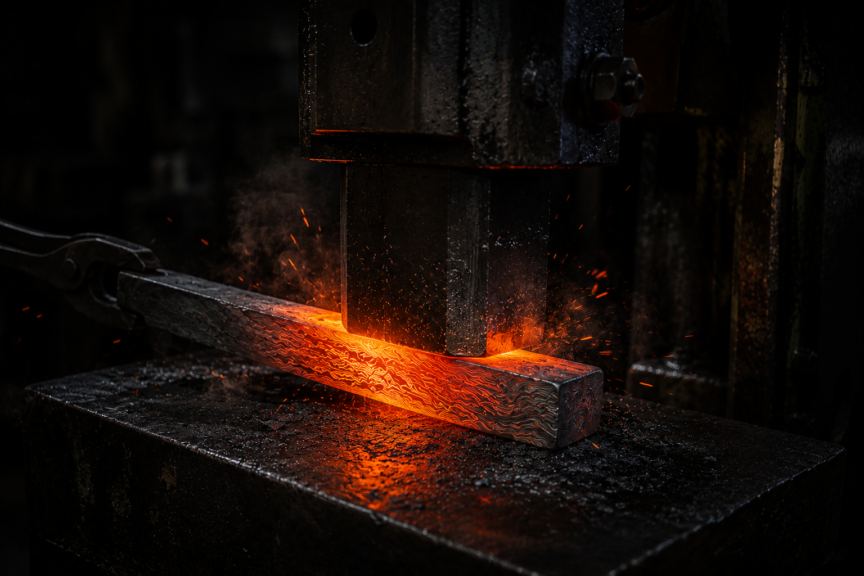
One of the biggest differences is steel hardness.
Japanese Steel
Japanese knives commonly use:
VG10 Steel
AUS-10
Blue Steel (Aogami)
White Steel (Shirogami)
Damascus Steel
Hardness usually ranges from 60–65 HRC.
Advantages:
Longer edge retention
Razor-sharp cutting
Cleaner slices
Disadvantages:
More brittle
Can chip if misused
German Steel
German knives commonly use:
X50CrMoV15
1.4116 Stainless Steel
Hardness is typically 56–58 HRC.
Advantages:
Tougher blades
Better impact resistance
Easier sharpening
Disadvantages:
Loses sharpness faster
Blade Sharpness
Japanese knives are among the sharpest kitchen knives available.
Typical edge:
12–15 degrees per side
German knives usually feature:
18–22 degrees per side
The narrower Japanese edge cuts with less resistance, producing smoother and cleaner slices.
Blade Thickness
Japanese blades are generally thinner.
Benefits include:
Faster cutting
Less food sticking
More precise control
German blades are thicker and stronger.
Benefits include:
Better for hard vegetables
Can handle tougher kitchen tasks
More durable
Weight and Balance
Japanese knives are noticeably lighter.
This reduces hand fatigue during long cooking sessions and offers excellent control.
German knives feel heavier due to their thicker blades and full tang construction.
Many professional chefs appreciate this additional weight because the knife does more of the work during chopping.
Edge Retention
Because of their harder steel, Japanese knives remain sharp much longer.
A quality Japanese knife may stay razor sharp for months with proper care.
German knives require sharpening more frequently but are easier to maintain.
Durability
German knives are the clear winner when it comes to durability.
They can tolerate:
Minor twisting
Tough vegetables
Frequent use
Heavy chopping
Japanese knives should never be used for:
Frozen foods
Bones
Hard squash
Prying ingredients apart
Improper use can chip the blade.
Maintenance
Japanese knives require more attention.
Best practices include:
Hand wash only
Dry immediately
Store safely
Use wooden cutting boards
Hone and sharpen correctly
German knives are more forgiving but still benefit from proper maintenance.
Avoid dishwashers for both styles.
Popular Japanese Knife Types
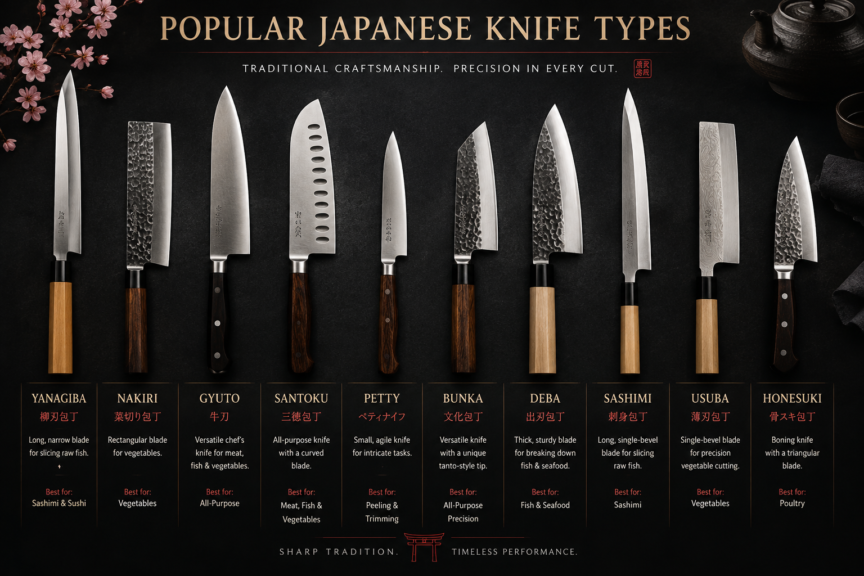
Japanese kitchens use specialized knives for different tasks.
Examples include:
Gyuto (Chef Knife)
Santoku
Nakiri
Yanagiba
Deba
Petty Knife
Each knife is designed for a specific purpose.
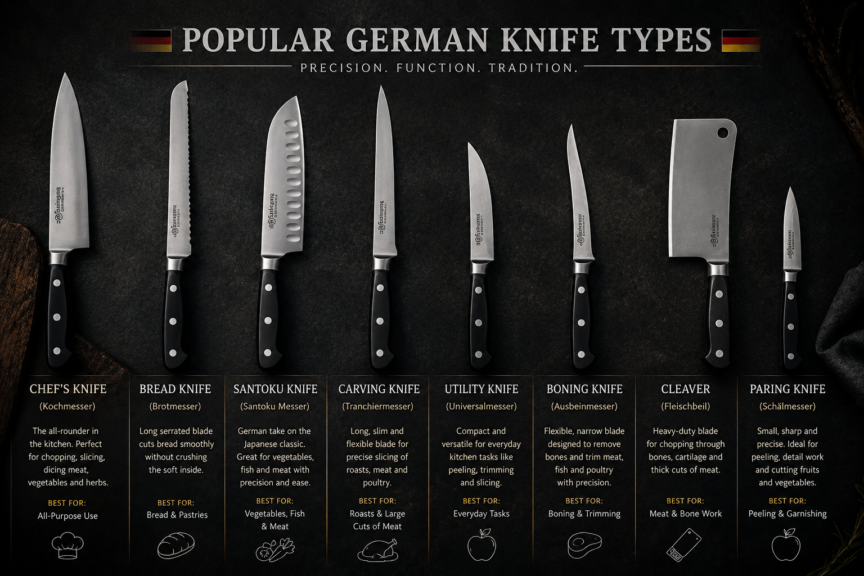
Popular German Knife Types
German kitchens often rely on multipurpose knives such as:
Chef’s Knife
Bread Knife
Utility Knife
Boning Knife
Paring Knife
Carving Knife
These knives are intended to perform a wide variety of kitchen tasks.
Which Knife Lasts Longer?
Both can last decades.
However:
A well-maintained Japanese knife keeps its sharp edge longer.
A German knife withstands rough treatment better.
Proper maintenance is far more important than the country of origin.
Which Knife Is Better for Beginners?
If you’re new to cooking:
Choose a German knife.
Reasons:
More durable
Easier maintenance
Less likely to chip
Better all-purpose performance
If you’re an experienced cook who values precision, Japanese knives are an outstanding investment.
Which Knife Is Better for Professional Chefs?
Professional chefs often own both.
Japanese knives are used for:
Fine slicing
Sushi
Presentation work
Delicate ingredients
German knives are preferred for:
Busy commercial kitchens
Heavy prep work
General cooking
Owning one of each provides the greatest versatility.
Price Comparison
Japanese premium knives often cost more because of:
Traditional craftsmanship
Harder steels
Hand finishing
Damascus patterns
German knives are available across a wider range of budgets and typically offer excellent long-term value.
Pros and Cons
Japanese Kitchen Knives
Pros
Razor-sharp edge
Excellent edge retention
Lightweight
Precision cutting
Beautiful craftsmanship
Cons
More brittle
Higher maintenance
Can chip
Often more expensive
German Kitchen Knives
Pros
Extremely durable
Easy to sharpen
Versatile
Beginner-friendly
Great for heavy-duty tasks
Cons
Requires more frequent sharpening
Slightly heavier
Less precise than Japanese knives
Final Verdict
Neither Japanese nor German kitchen knives are objectively better—they are designed with different priorities.
Choose a Japanese knife if you want exceptional sharpness, precision, and lightweight performance for delicate slicing and refined cooking techniques.
Choose a German knife if you need a durable, versatile workhorse that handles everyday kitchen tasks with ease.
Many professional chefs keep both styles in their kitchen, using each where it performs best. The right choice ultimately depends on your cooking habits, maintenance preferences, and the types of food you prepare most often.