Why Damascus Steel Is So Popular
Damascus steel has earned a legendary reputation among chefs, collectors, outdoor enthusiasts, and knife makers alike. Its distinctive flowing patterns, excellent cutting performance, and rich history have made it one of the world’s most admired blade materials.
But what exactly makes Damascus steel so popular? Is it just the beautiful appearance, or is there more behind its reputation?
In this guide, we’ll explore the history, craftsmanship, benefits, and reasons why Damascus steel continues to be a top choice for premium knives.
What Is Damascus Steel?
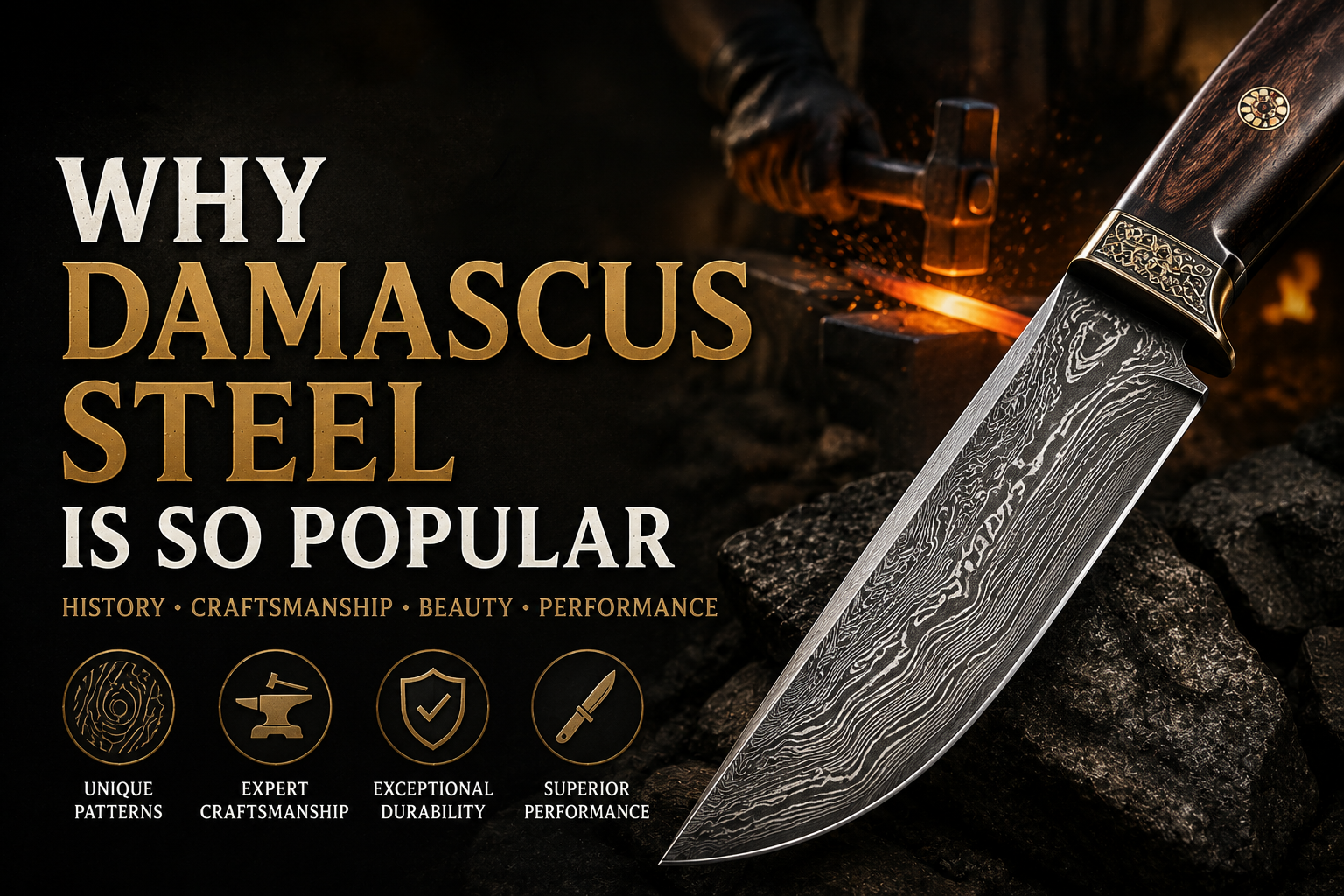
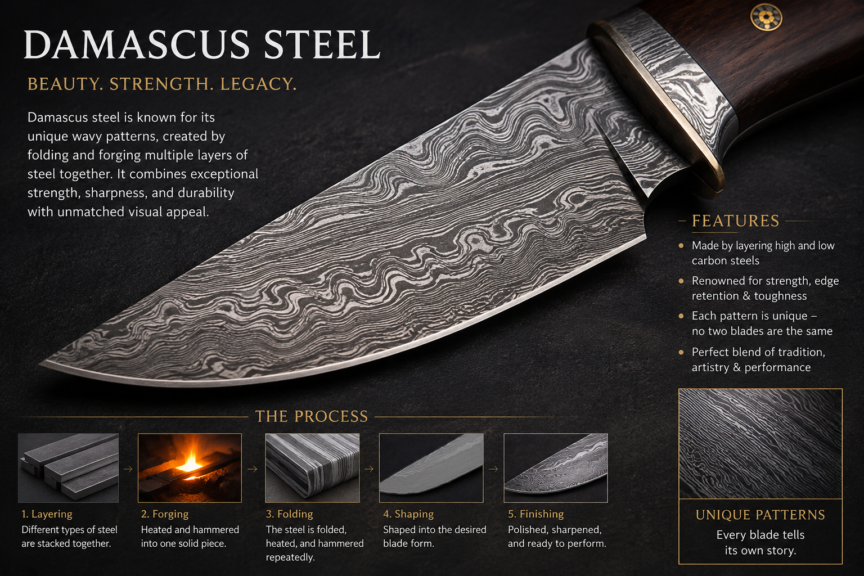
Damascus steel refers to steel that displays distinctive flowing, wavy, or layered patterns on its surface. Modern Damascus steel is typically created by forge-welding multiple layers of different steels together, then repeatedly folding and forging them to produce the iconic pattern.
The result is a blade that combines beauty with excellent cutting performance.
The History of Damascus Steel
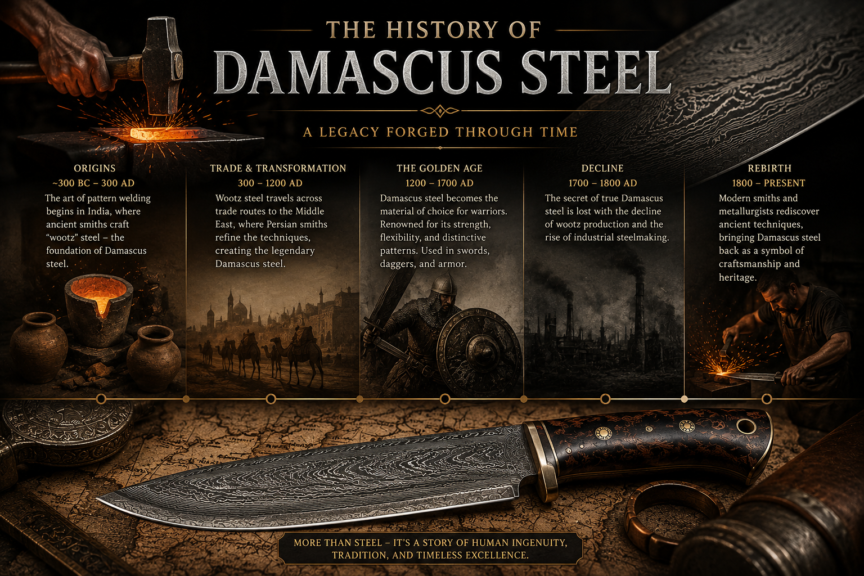
The name “Damascus” comes from the ancient city of Damascus in present-day Syria, a major trading center where high-quality blades became famous centuries ago.
Historical “Damascus steel” and modern pattern-welded Damascus are not identical materials. While the original production methods were eventually lost, today’s Damascus knives are inspired by the appearance and craftsmanship associated with those historic blades.
Modern Damascus steel celebrates this legacy through advanced forging techniques and high-quality steels.
Stunning and Unique Patterns
One of the biggest reasons Damascus steel is so popular is its appearance.
Each Damascus blade features unique layered patterns that resemble:
Flowing water
Wood grain
Raindrops
Twisting waves
Feather patterns
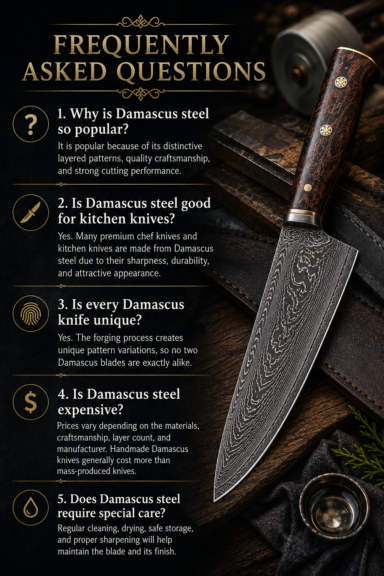
Because every forging process is slightly different, no two Damascus knives look exactly alike.
Exceptional Craftsmanship
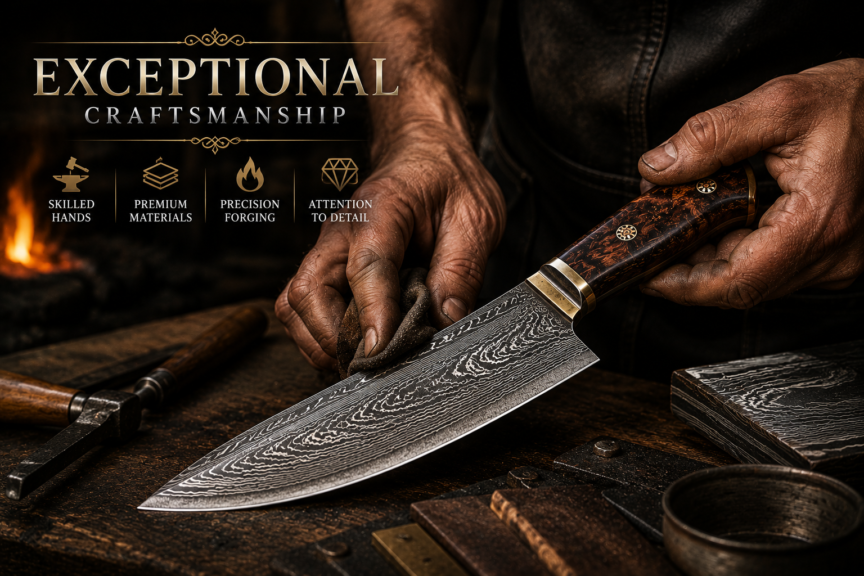
Creating Damascus steel requires significant skill and experience.
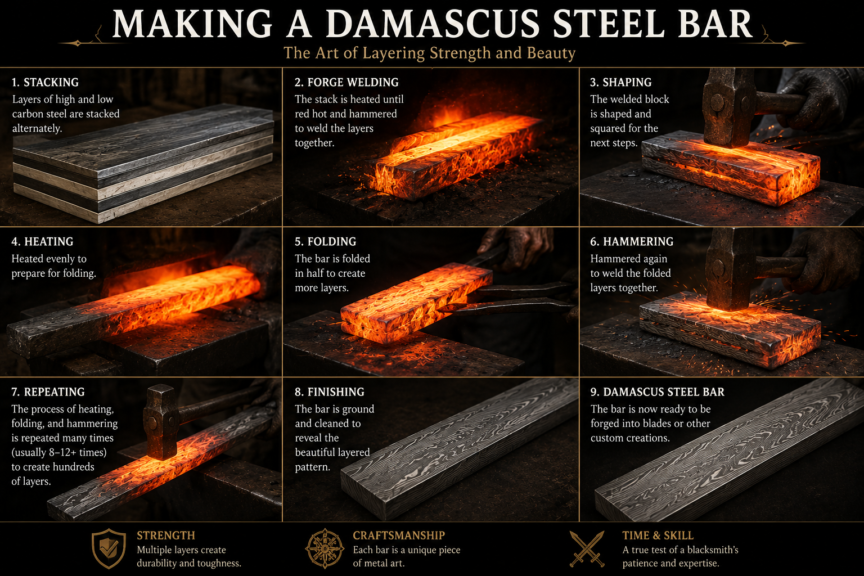
The manufacturing process often includes:
Selecting compatible steels
Forge welding multiple layers
Repeated folding and forging
Heat treatment
Grinding
Polishing
Acid etching to reveal the pattern
This level of craftsmanship makes Damascus knives highly valued by collectors and professionals.
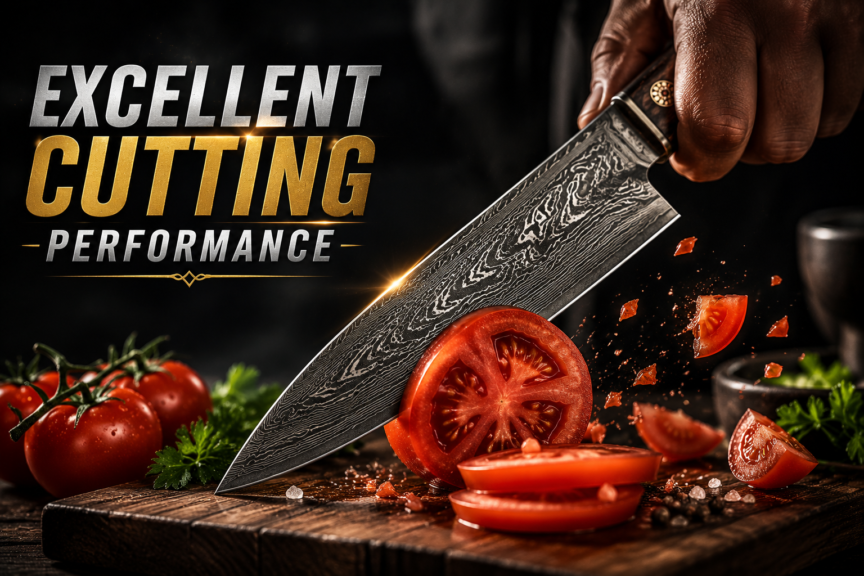
Excellent Cutting Performance
High-quality Damascus knives are designed for precision cutting.
Depending on the steels used, they often provide:
Sharp cutting edges
Good edge retention
Smooth slicing performance
Reliable everyday use
The blade’s performance ultimately depends on the quality of the steel, heat treatment, and craftsmanship.
Durability
A well-made Damascus knife can last for many years with proper care.
Modern Damascus blades are known for:
Strong construction
Reliable performance
Resistance to everyday wear
Long service life
Regular maintenance helps preserve both the blade and its appearance.
Perfect Balance of Beauty and Function
Unlike decorative knives that are meant only for display, many Damascus knives are designed to be fully functional.
They combine:
Premium materials
Precision engineering
Elegant craftsmanship
Practical performance
This balance makes them popular for both professional and personal use.
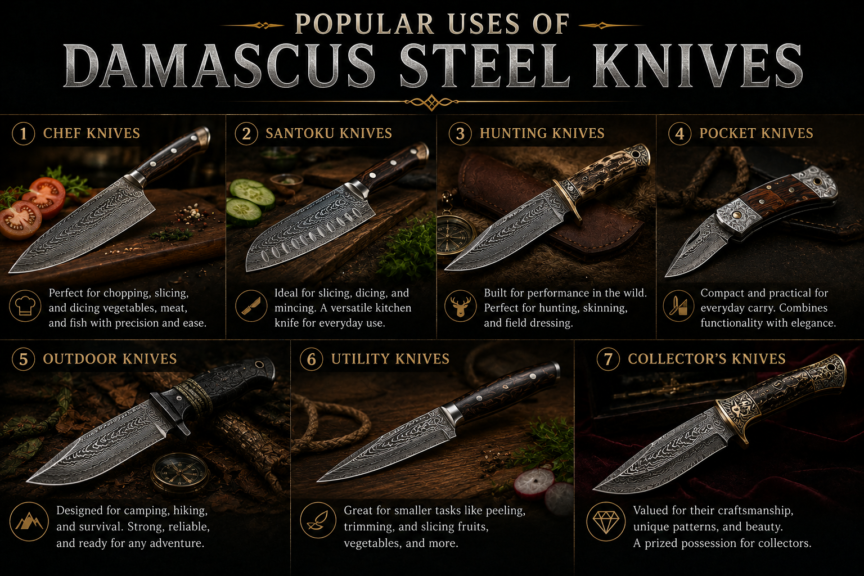
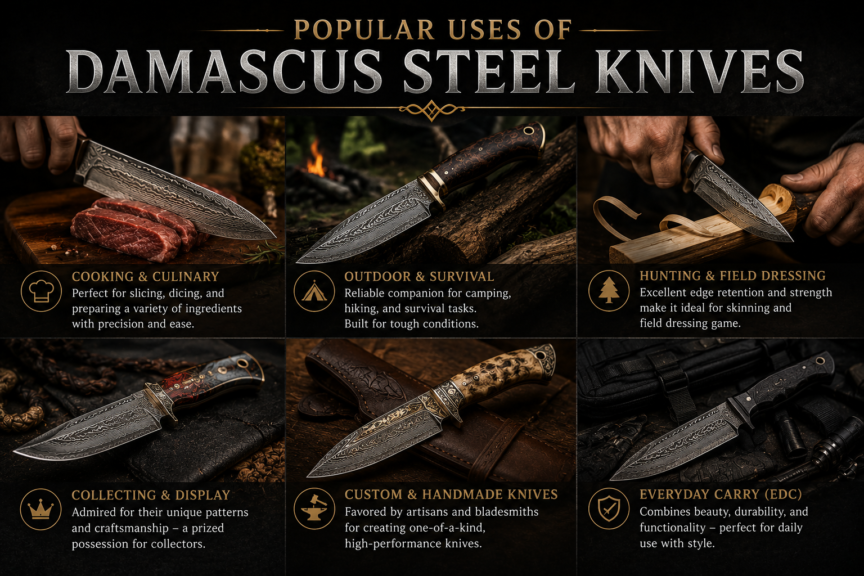
Popular Uses of Damascus Steel Knives
Damascus steel is widely used for various types of knives, including:
Chef knives
Santoku knives
Hunting knives
Pocket knives
Outdoor knives
Utility knives
Collector’s knives
Its versatility makes it suitable for many applications.
Why Collectors Love Damascus Steel
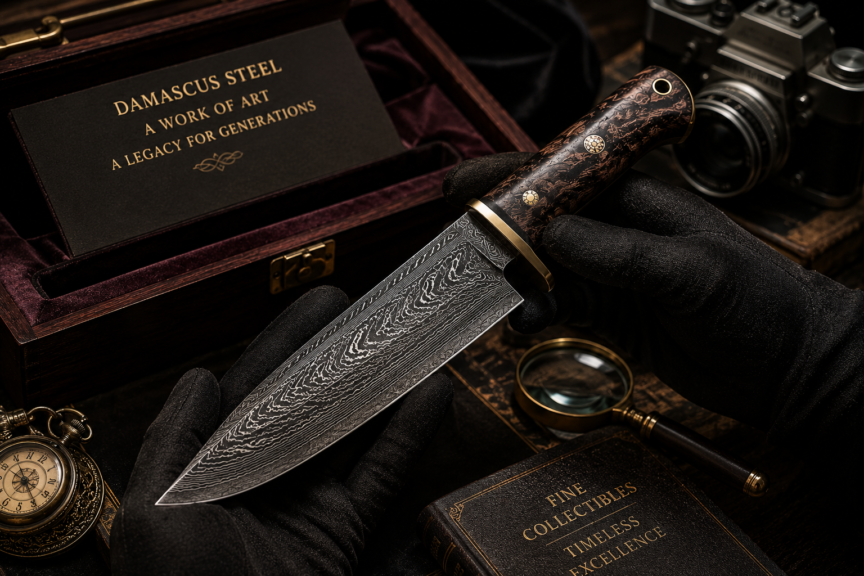
Collectors appreciate Damascus steel because every blade has its own identity.
Many premium handmade Damascus knives feature:
Exotic wood handles
Resin handles
Micarta handles
Brass or mosaic pins
Custom leather sheaths
These details make each knife a unique work of craftsmanship.
Is Damascus Steel Worth It?
For many buyers, the answer is yes.
A quality Damascus knife offers:
Beautiful appearance
Excellent craftsmanship
Reliable cutting performance
Long lifespan
Collector value
Choosing a knife from a reputable manufacturer is important, as quality can vary.
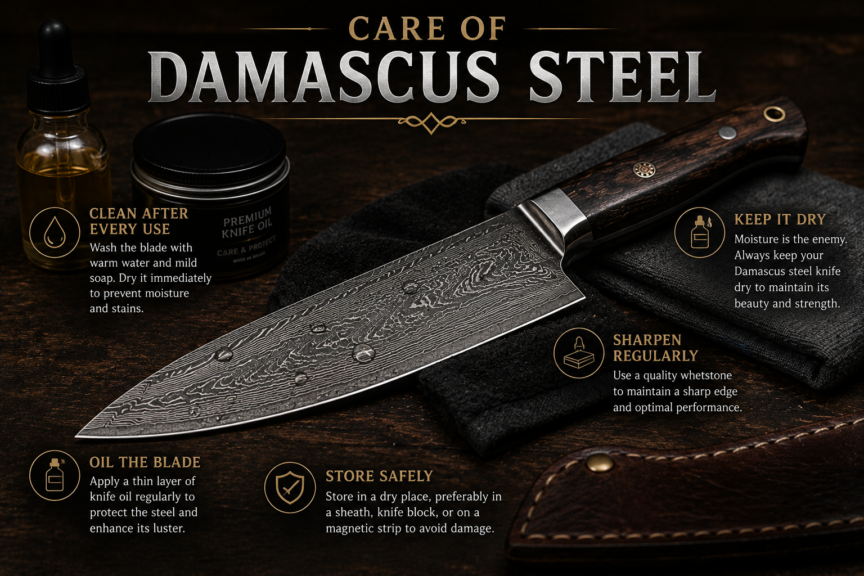
How to Care for Damascus Steel
Proper care helps maintain both the blade and its distinctive pattern.
Clean After Every Use
Wash the knife with mild soap and water, then dry it immediately.
Keep It Dry
Avoid leaving moisture on the blade for extended periods.
Sharpen Properly
Use appropriate sharpening tools to maintain the cutting edge.
Store Safely
Keep the knife in a knife block, protective sheath, or storage case.
Common Myths About Damascus Steel
Myth 1: Damascus Steel Never Gets Dull
No knife remains permanently sharp. All blades eventually require sharpening.
Myth 2: Every Damascus Knife Is Handmade
Some Damascus knives are handcrafted, while others are produced using modern manufacturing methods.
Myth 3: The Pattern Is Only Decorative
The visible pattern results from layers of different steels in modern pattern-welded Damascus, though the blade’s performance depends primarily on the steel selection, heat treatment, and manufacturing quality—not the pattern alone.
Keywords
why Damascus steel is so popular
Damascus steel
Damascus steel knife
Damascus knife
Damascus steel history
Damascus steel benefits
handmade Damascus knife
Damascus chef knife
Damascus hunting knife
Damascus pocket knife
premium knives
forged Damascus steel
pattern welded steel
Damascus blade
knife craftsmanship