In the world of knives—whether culinary, outdoor, or everyday carry—few topics spark as much debate as edge angles. Everyone agrees that a sharp knife is safer and more efficient than a dull one, but how sharp is sharp enough? The answer lies in the geometry of the blade itself.
Knife sharpness isn’t just about how keen the edge feels; it’s fundamentally shaped by the angle at which that edge is ground. Understanding edge angles helps you choose the right knife for the job, sharpen with confidence, and prolong the life of your blades.
What Exactly Is an Edge Angle?
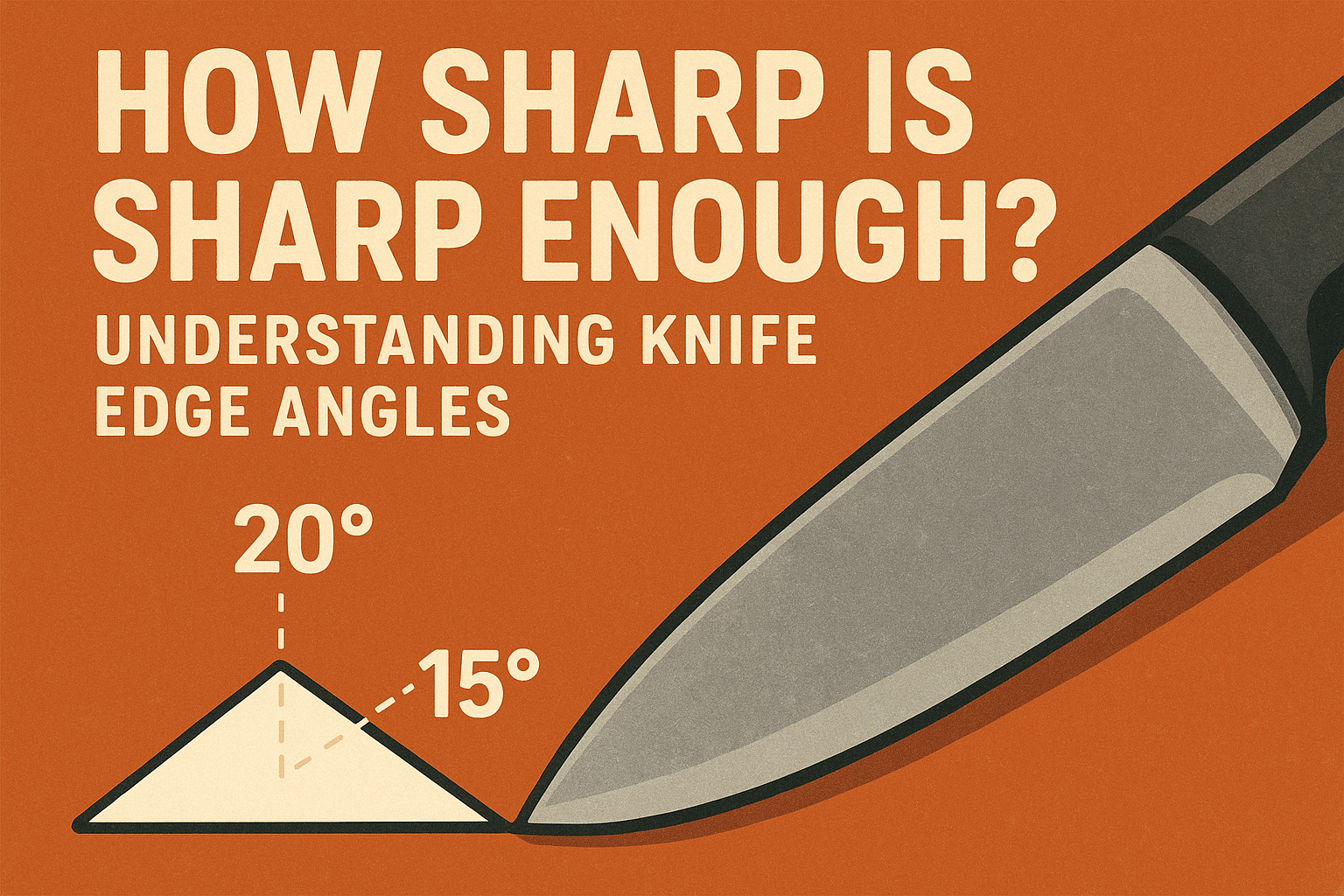
The edge angle is the angle from the center of the blade’s edge to one side. Because a knife has two sides, the total included angle is typically double this number.
15° per side = 30° included angle
20° per side = 40° included angle
A lower angle means a thinner, sharper edge. A higher angle means a sturdier, more durable edge. The sweet spot depends on how the knife will be used.
Why Edge Angle Matters
1. Sharpness vs. Durability
Lower angles make slicing silky and effortless, but the edge becomes more fragile. Higher angles sacrifice some initial sharpness for toughness and resilience under heavy use.
2. Cutting Performance
A thin edge moves through material with less resistance—great for kitchen prep, delicate carving, or shaving. A thicker edge wedges material apart—better for chopping, batoning, or cutting abrasive materials.
3. Sharpening Strategy
Knowing your target angle helps you sharpen evenly and avoid over-grinding. It also ensures your blade performs as intended.
Common Knife Edge Angles and Their Best Uses
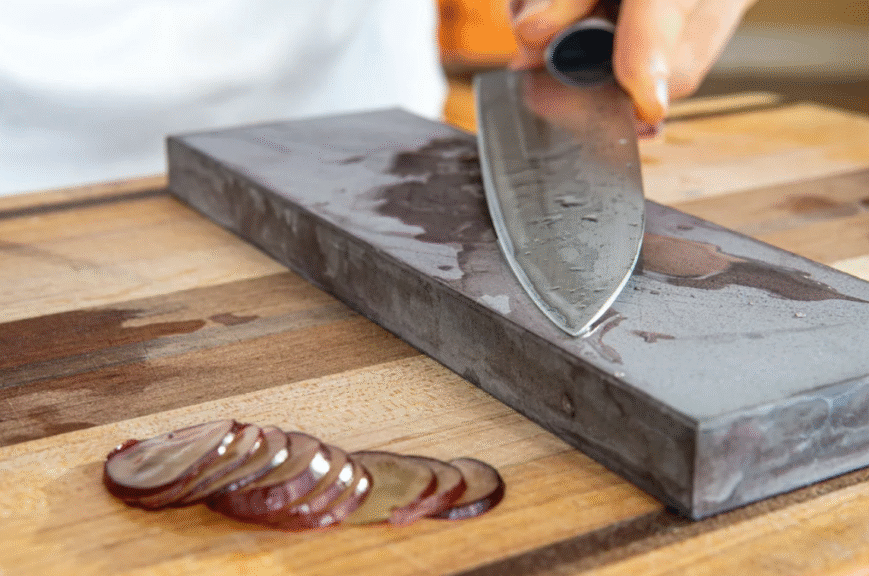
10°–15° per side (20°–30° included)
Ultra-sharp, precise cutting
Ideal for:
Japanese chef’s knives
Slicers and fillet knives
Straight razors
These edges are razor-sharp but delicate. Best reserved for fine kitchen work—not for bones, frozen food, or hard materials.
25°–30° per side (50°–60° included)
Heavy-duty workhorses
Ideal for:
Machetes
Camp knives
Tools like hatchets and cleavers
This is where durability rules. Sharpness takes a back seat to brute force and edge stability.
15°–20° per side (30°–40° included)
Balanced sharpness and durability
Ideal for:
Western kitchen knives
General-purpose EDC folders
Pocket knives
This range hits the sweet spot for most users. It provides enough bite for precision cutting while still holding up to daily tasks.
20°–25° per side (40°–50° included)
Tough, hard-use edges
Ideal for:
Hunting knives
Outdoor / bushcraft blades
Survival knives
If you need your knife to withstand chopping, carving, or cutting tough or dirty materials, this is your zone.
How to Choose the Right Angle for Your Knife
Ask yourself the following:
What do you cut most often?
Veggies, fish, boneless meats → 15°
Cardboard, rope, daily tasks → 17°–20°
Wood, game processing, bushcraft → 22°–25°
Chopping brush or hard impacts → 25°+
How much maintenance are you willing to do?
Lower angles dull faster and require more frequent touch-ups.
What steel does your knife use?
High-hardness steels (e.g., many premium Japanese or powder metallurgy steels) can support lower angles. Softer steels need higher angles to avoid rolling.
less.
Signs You Should Change Your Edge Angle
Your thin edge chips easily → increase the angle.
Your thick edge struggles to slice cleanly → decrease the angle.
Sharpening feels slow or inconsistent → keep the angle consistent on both sides.
Your goal isn’t the sharpest possible edge—it’s the sharpest practical edge for your use case.